
What is Dynamic Leadership?
Dynamic Leadership is our approach to leading in organisations: drawing on seven ways of leading, often several at once, in the mix each situation calls for.
At its centre is the impact you want to have: bringing forth and achieving the desired impact, together.
- Bringing forth: what is possible. The vision.
- Achieving: making it real. The results.
- Together: with others, by their choice. The people.
At its root, to lead means to cause to go, usually by going with them. One small word holds people, vision and results.
Why leadership needs to be dynamic
The future is uncertain, and the present is complex.
We shape what we can, equip for what we need or might need, and grow our capability to navigate a wider range of what comes.
No one person can carry all of that. So leaders draw on different ways of leading, often several at once, depending on the situation.
How the framework came about
Lisa Mandic has taught the approaches behind Dynamic Leadership for decades, long before it had a name.
Over 30 years of facilitating and consulting with organisations across Aotearoa New Zealand, she gathered the approaches that helped people lead well, and tested them with leaders in varying roles. Some approaches came from research and the thinking of others. Many came from what she learned worked in practice.
The framework brings them together. It shows the many ways involved in dynamically leading, so leaders can see what a situation calls for, and grow their competency in all areas of the framework.
Lisa Mandic, Management Consultant and Learning Facilitator
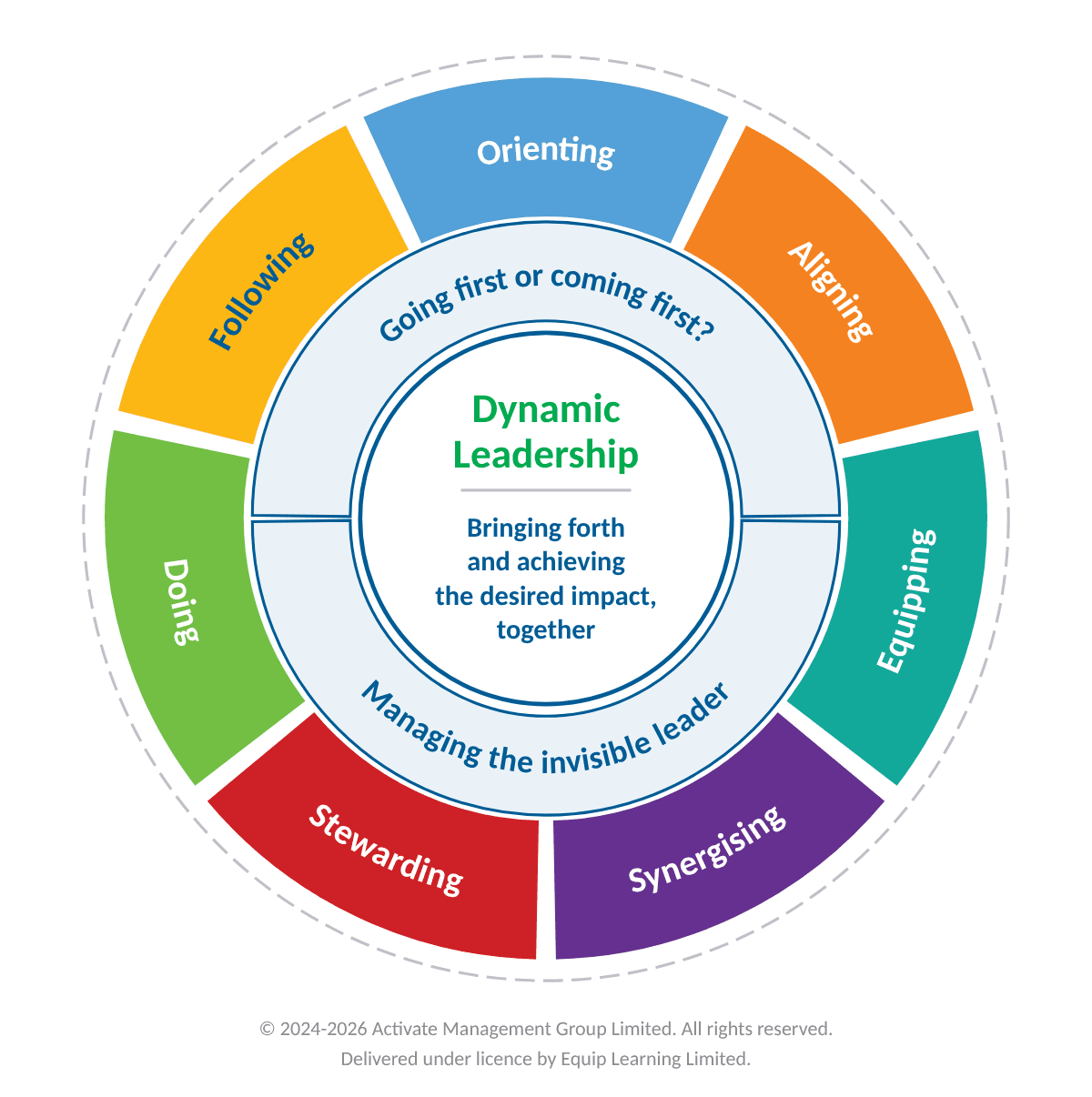
The Equip Dynamic Leadership Framework
At the centre is the desired impact.
Around it sits self-leadership: the foundation for leading others, and an ongoing practice.
Around that are seven ways of leading. They’re not steps or stages. Most situations call for several at once, and the mix shifts as the situation changes.
Shape, equip and grow
Leaders shape many of the conditions people work in. Some conditions sit outside anyone’s control. And people don’t always hold the authority to shape the conditions that are changeable.
As leaders, we need to attend to:
- Cultivating the conditions we can shape
- Equipping people with what they need, and
- Growing capability for what may come next.
From super doer to super guide
Many people step into leadership because they were good at the doing. Leadership asks for a shift: from being a super doer to being a super guide.
A good guide goes first, but not alone.
They help the group get clear on where they’re heading, and why. They find the best route, and shape the conditions so the group can travel well. They ensure people have what they need, and grow their confidence to make their way.
They draw out what each person brings, so the journey is smoother and richer for whoever is on it. They look after the group and its resources for the long term.
They do their own share of the work. And when someone else knows the next stretch better, they follow.
Why learn Dynamic Leadership?
- ✓See what a situation calls for, rather than relying on habit
- ✓Step back from doing it all yourself, without losing sight of your own work
- ✓Lead well when things are uncertain or changing
- ✓Grow the capability of the people you lead, so together you can handle more
- ✓Share a common language for leading across your team
Learn Dynamic Leadership with us
Equip Dynamic Leadership underpins all our leadership development services. Whether it’s a short course or a year-long development programme, leaders learn specific approaches that sit within the framework.
Questions people ask